

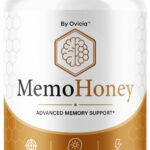
The proposed review compares the supplement’s disclosed ingredient quantities with published research and outlines the limitations of evidence for the individual ingredients.
The proposed review compares the supplement’s disclosed ingredient quantities with published research and outlines the limitations of evidence for the individual ingredients.
OGDEN, Utah , November 24, 2026 – MemoHoney is preparing an ingredient research review examining the seven ingredients listed on its dietary supplement label, with a focus on how the stated amounts compare with quantities investigated in published scientific studies. The proposed review is intended to give consumers a clearer way to distinguish between an ingredient’s established biological role, research conducted at different doses and evidence relating to the finished product itself.
The MemoHoney Supplement Facts information currently available lists seven ingredients per one-capsule serving: niacin (7.5 mg NE), calcium (18 mg), L-arginine (200 mg), L-arginine AKG 2:1 extract (200 mg), L-citrulline HCl (100 mg), L-citrulline malate (100 mg) and beta-alanine (40 mg). The label information identifies 30 servings per container and lists an individual quantity for each ingredient rather than combining them into one undisclosed proprietary blend.
The proposed review will examine what published research says about these ingredients while identifying an important distinction: research on an ingredient does not establish that MemoHoney, at its labeled serving amounts, produces the same outcomes. The available sources reviewed for this article do not establish a clinical trial demonstrating that the finished MemoHoney capsule improves memory or cognitive performance.
What the MemoHoney label discloses
The available Supplement Facts information lists seven ingredients and their individual amounts for a one-capsule serving. This allows readers to examine each listed quantity separately rather than relying on a single combined blend figure.
|
Ingredient |
Listed amount per capsule |
|---|---|
|
Niacin |
7.5 mg NE |
|
Calcium |
18 mg |
|
L-Arginine (base) |
200 mg |
|
L-Arginine AKG 2:1 extract |
200 mg |
|
L-Citrulline HCl |
100 mg |
|
L-Citrulline Malate |
100 mg |
|
Beta-alanine |
40 mg |
The two listed arginine entries total 400 mg by label weight, while the two citrulline entries total 200 mg by label weight. Beta-alanine is listed separately at 40 mg. These are arithmetic totals of the amounts printed on the label; they should not be interpreted as equivalent quantities of pure amino acids without further information about the raw materials and their composition.
The label also identifies a vegetable capsule and lists hypromellose, vegetable stearate and silicon dioxide among the other ingredients. These are separate from the seven entries in the Supplement Facts panel.
See what makes MemoHoney’s ingredient blend interesting.
Why compare label quantities with published research?
A research finding is meaningful only when readers understand what ingredient was studied, how much was used, who participated and what outcome researchers measured. A study involving a particular ingredient at a substantially different dose cannot automatically be used to establish the effects of a finished supplement.
That distinction is particularly relevant to products containing amino acids. Studies may investigate a single ingredient, a particular chemical form or a combination of ingredients. The amount used in a controlled study may also be different from the amount listed on a retail supplement label.
For MemoHoney, the available label information provides individual amounts, but the public research reviewed here does not establish that the complete seven-ingredient formula has been clinically tested at the labeled serving.
What research says about L-arginine
L-arginine is an amino acid involved in protein metabolism and the production of nitric oxide, a molecule that helps regulate blood-vessel function. Researchers have examined supplemental L-arginine in several areas, including circulation and exercise-related outcomes.
The National Institutes of Health Office of Dietary Supplements describes the evidence for arginine in exercise and athletic performance as limited, with clinical findings that do not consistently demonstrate meaningful improvements. MedlinePlus also notes that evidence varies by proposed use and that results from research involving particular health conditions should not be generalized to other purposes.
MemoHoney lists 200 mg of L-arginine base per capsule. That amount should be considered separately from the 200 mg listed for L-arginine AKG 2:1 extract. The label does not establish that the two entries provide an equivalent amount of free L-arginine.
The existence of research into nitric oxide pathways does not demonstrate that this particular serving improves memory, circulation or any medical condition.
L-arginine AKG: what the label does and does not establish
L-arginine AKG is a form of arginine associated with alpha-ketoglutarate. Research involving arginine-related compounds may explore metabolism, exercise or physiological pathways, but evidence for one preparation cannot automatically be applied to another.
The available MemoHoney label lists 200 mg of L-arginine AKG 2:1 extract. It does not provide enough information to calculate the exact amount of free L-arginine supplied by that entry. Consumers should therefore avoid treating the full 200 mg as an independently verified amount of pure L-arginine.
A meaningful comparison with a published study would require confirmation of the precise ingredient specification, including the material’s composition and the form used in the research.
What studies say about L-citrulline
L-citrulline is an amino acid involved in the body’s conversion pathways related to arginine and nitric oxide. Researchers have examined citrulline and citrulline malate, particularly in exercise-related studies.
The NIH Office of Dietary Supplements reports that research on citrulline for improving athletic performance remains limited and conflicting. Some small studies have reported differences in selected exercise outcomes, while others have not found a benefit. The research has used varying amounts, study designs and participant groups.
MemoHoney lists 100 mg of L-citrulline HCl and 100 mg of L-citrulline malate. Those quantities should not be treated as interchangeable with 200 mg of pure L-citrulline. Different forms can have different compositions, and the actual citrulline contribution depends on the material specification.
The published evidence does not establish that the amounts listed on the MemoHoney label reproduce the results of studies that used larger quantities or different preparations.
Beta-alanine and the difference between research doses and label amounts
Beta-alanine is a non-essential amino acid that contributes to the production of carnosine in skeletal muscle. Researchers have investigated its potential role in high-intensity exercise, where muscle carnosine may help buffer changes in acidity during strenuous activity.
The NIH Office of Dietary Supplements describes the findings as mixed. Some research has reported effects in selected high-intensity exercise settings, but results vary according to the activity, duration and study design.
MemoHoney lists 40 mg of beta-alanine per capsule. The NIH fact sheet discusses studies using daily amounts in the gram range, including approximately 1.6 to 6.4 grams per day in some research contexts. The 40 mg label amount is substantially below those quantities.
This comparison does not establish that the ingredient has no biological activity. It does mean that research conducted at gram-level amounts should not be presented as proof of an outcome from a 40 mg serving.
Niacin: an established nutrient, not proof of a finished-product outcome
Niacin is a B vitamin involved in normal energy metabolism and other cellular functions. It is found in foods and dietary supplements, and its nutritional requirements are established independently of any particular branded product.
MemoHoney lists 7.5 mg niacin equivalents (NE) per capsule. The NIH Office of Dietary Supplements explains that niacin occurs in different forms, including nicotinic acid and nicotinamide, and that effects and tolerability can differ by form and amount.
The specific form of niacin should be confirmed from the product’s complete ingredient specification before making more detailed comparisons. The presence of niacin on a label does not establish that a supplement improves memory or prevents cognitive decline.
Calcium: a mineral with recognized nutritional functions
Calcium is an essential mineral involved in bone structure, muscle contraction, nerve transmission and other normal physiological processes. Its nutritional role is well established, but the amount in a particular product needs to be considered in the context of total daily intake from food and other supplements.
MemoHoney lists 18 mg of calcium per capsule. That is a small amount compared with the daily calcium requirements commonly established for adults. The label identifies calcium as calcium carbonate, but the product’s 18 mg entry should be understood as the declared calcium amount rather than 18 mg of calcium carbonate raw material.
The presence of calcium does not demonstrate a cognitive benefit from the finished formula.
Does ingredient research prove MemoHoney works?
No. Research on individual ingredients cannot substitute for clinical testing of the finished product. A study may use a different dose, ingredient form, combination or participant population from the one represented by a retail supplement.
The available public information reviewed for this article does not establish a randomized controlled trial of MemoHoney’s complete seven-ingredient formula at its labeled serving size. Claims about memory improvement, concentration or cognitive performance would therefore require appropriate product-specific evidence before they could be presented as demonstrated outcomes.
This distinction is important for consumers comparing supplements. A nutrient may have a recognized role in normal physiology, while evidence that a particular supplement produces a measurable benefit remains limited or unavailable.
Curious about MemoHoney’s ingredient combination? Explore more.
Product directions and label cautions
The available label information directs adults to take one capsule daily with an eight-ounce glass of water. It also gives an option to take the capsule 20 to 30 minutes before a meal, or as directed by a healthcare professional.
The label advises consumers not to exceed the recommended dose. It also states that pregnant or nursing individuals, children under 18 and people with a known medical condition should consult a physician before use. The label advises keeping the product out of reach of children and not using it if the safety seal is damaged or missing.
People taking medication or managing a medical condition should discuss supplement use with a qualified healthcare professional. This is particularly relevant for products containing arginine-related ingredients, because L-arginine may affect blood pressure and can interact with certain medicines. MedlinePlus identifies possible interactions involving blood-pressure medicines, diabetes medicines and other products.
The product label should be checked directly before use, and consumers should follow the warnings on the bottle.
What consumers should know about dietary supplement regulation
Dietary supplements are regulated differently from prescription medicines. The U.S. Food and Drug Administration does not generally approve dietary supplements for safety and effectiveness before they are marketed.
FDA rules require applicable labeling information and prohibit false or misleading labeling. Certain structure/function claims may be used when they meet the relevant legal requirements, including substantiation, the required disclaimer and notification to FDA within 30 days after first marketing the product with the claim.
The standard disclaimer states: “This statement has not been evaluated by the Food and Drug Administration. This product is not intended to diagnose, treat, cure, or prevent any disease.”
A disclaimer does not mean that FDA has evaluated or endorsed a product. Nor does it establish that a finished supplement has been clinically proven to produce a claimed result.
Proposed company statement
The following statement is proposed for approval by an authorized MemoHoney representative. It must not be attributed to a real person until the company supplies and approves the person’s name and title.
“An ingredient list is most useful when consumers can examine the amount of each component and understand what the available research does—and does not—show. We believe product information should distinguish between established nutrient functions, findings from studies using different amounts and evidence that would be needed to evaluate the finished formula,” said Clark HOD
“Ingredients such as L-arginine, L-citrulline and beta-alanine have been examined in scientific research for their roles in nitric oxide production, muscle metabolism and exercise performance. However, the outcomes depend on the ingredient form, dosage and study population. These findings provide useful information about the ingredients, but they should not be interpreted as proof that the finished MemoHoney formula improves memory or cognitive performance,” said Dr. James Anderson, Head of Nutritional Research.
Explore what makes MemoHoney’s formula unique.
Frequently asked questions
How many ingredients are listed in MemoHoney?
The available Supplement Facts information lists seven ingredients: niacin, calcium, L-arginine, L-arginine AKG 2:1 extract, L-citrulline HCl, L-citrulline malate and beta-alanine.
Does MemoHoney use a proprietary blend?
The available label information lists a separate amount for each of the seven ingredients rather than showing one combined proprietary-blend amount. Consumers should verify this against the current bottle label.
Has MemoHoney been clinically proven to improve memory?
The public sources reviewed for this proposed article do not establish a clinical trial of the finished MemoHoney formula demonstrating improved memory or cognitive performance. Ingredient research alone does not prove a finished-product outcome.
Are the amounts in MemoHoney the same as amounts used in research?
Not necessarily. Research uses different ingredient forms, doses and study designs. For example, some beta-alanine exercise studies discussed by NIH used gram-level daily amounts, whereas the MemoHoney label lists 40 mg per capsule.
Is MemoHoney FDA-approved?
Dietary supplements are not generally approved by FDA for safety and effectiveness before they are marketed. Consumers should not interpret a product’s presence on the market or a label disclaimer as FDA approval or endorsement.
How should consumers take MemoHoney?
The available label directs adults to take one capsule daily with an eight-ounce glass of water. Consumers should follow the current bottle directions and warnings and consult a healthcare professional when appropriate.
About MemoHoney
MemoHoney is marketed as a dietary supplement in capsule form. The available product information identifies a seven-ingredient formula and lists Instituto Experience as the distributor. The company should confirm its current legal business name, official website, product range, founding information and approved company description before this boilerplate is used in a distributed press release.
Product guide: MemoHoney Official Website
Media Contact:
Company name: MemoHoney
Address: 1200 CAPITOL ST OGDEN UT 84401-2804 USA
Email: cs@memohoney.com
Founded Year: 2026
Website: memohoney.com