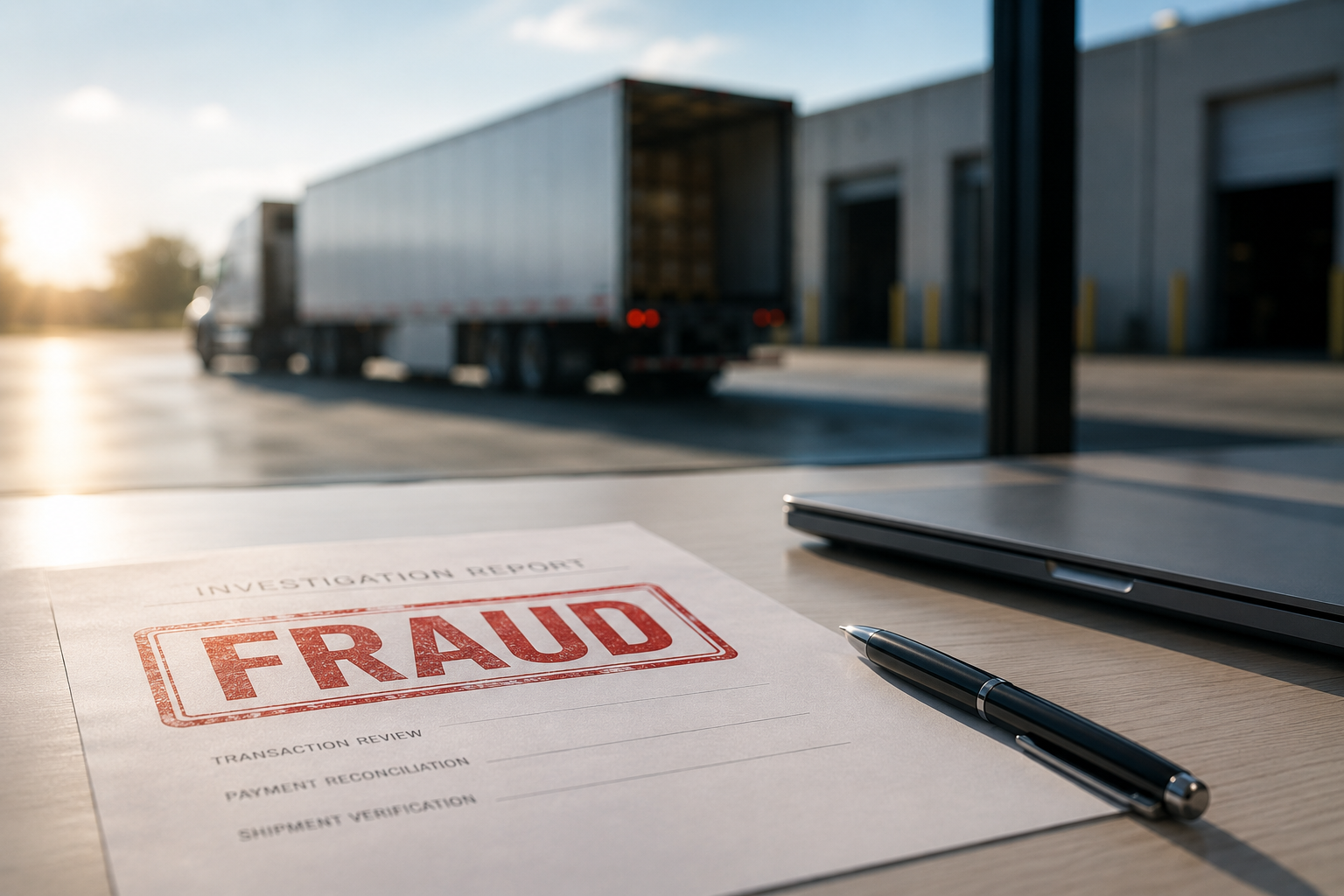
Internal review revealed undisclosed relationships, carrier identity discrepancies, and payment flows misaligned with transportation providers.
CHICAGO, IL, UNITED STATES, June 11, 2026 /EINPresswire.com/ — Cargoos Logistics today released a freight fraud advisory following an internal investigation that uncovered a complex transportation scheme involving multiple authorities, undisclosed business relationships, and payment flows that did not match the companies performing the actual freight movement.
The case highlights a growing challenge across the logistics industry: modern freight fraud often does not begin with stolen cargo, forged documents, or fake companies.
Instead, it can begin with something that appears completely legitimate.
A valid carrier.
A licensed broker.
A real shipment.
A signed proof of delivery.
A paid invoice.
And yet, behind the paperwork, the operational reality may be entirely different.
According to Cargoos, the investigation began after internal audits identified inconsistencies between carrier assignments, rate confirmations, proof-of-delivery documents, invoices, and payment records. Further review revealed patterns that raised questions about who had actually moved certain shipments and which entities ultimately received payment.
“What makes today’s freight fraud difficult to detect is that many transactions initially look normal,” said Artur Gronus, CEO of Cargoos Logistics. “The freight moves. The paperwork exists. The customer believes the shipment was covered properly. The problem often appears only when someone starts comparing the operational records against the payment trail.”
When the Carrier, the Broker, and the Payment Recipient Are Not the Same
Cargoos found that some transactions involved multiple transportation authorities and entities participating in different parts of the process. Internal findings suggested that freight was moved through one set of transportation providers while payments were directed through another business entity.
The situation created confusion regarding:
• who accepted the load,
• who physically transported the freight,
• who assumed operational responsibility,
• and who ultimately collected payment.
In several instances, legitimate carriers completed transportation services while separate invoicing and factoring arrangements appeared to follow a different path.
A Growing Industry Problem
Cargoos believes the case reflects broader trends affecting transportation companies nationwide.
As logistics operations become increasingly digital, fraud schemes are becoming more sophisticated and often involve:
• double brokering,
• carrier identity manipulation,
• unauthorized use of transportation authorities,
• payment diversion,
• factoring-related disputes,
• and undisclosed relationships between entities involved in freight transactions.
Unlike traditional cargo theft, many of these schemes do not become visible immediately.
The shipment may be delivered successfully.
The paperwork may appear complete.
The fraud may remain hidden until carriers seek payment, invoices are reconciled, or operational records are reviewed.
“The freight industry has become faster and more connected,” Gronus said. “Unfortunately, fraud has evolved at the same pace.”
The Red Flags Many Companies Miss
Cargoos says transportation providers should pay closer attention when:
• the company requesting payment is not the company that moved the freight;
• carrier information changes unexpectedly;
• multiple entities appear connected but were never disclosed;
• rate confirmations originate from unfamiliar contacts;
• carrier assignments do not match proof-of-delivery records;
• or payment instructions change during the shipment lifecycle.
According to Cargoos, no single document is sufficient to verify a transaction. Carrier identity, operational execution, invoicing, and payment records should align across the entire shipment process.
Visibility Is Becoming a Competitive Advantage
The company believes freight fraud prevention is becoming an increasingly important part of transportation management and risk control.
Cargoos recommends that shippers, brokers, carriers, and factoring companies strengthen carrier verification procedures, review payment controls, and improve visibility across shipment workflows.
“The question is no longer whether freight fraud exists,” Gronus added. “The question is whether companies can identify it before the money changes hands.”
The company says the investigation remains an important reminder that in modern logistics, the greatest risks are not always visible at pickup or delivery.
Sometimes they are buried in the paperwork between them.
Jaymie Freeman
Cargoos Logistics
+1 312-772-4422
email us here
Visit us on social media:
LinkedIn
Facebook
X
Other
Legal Disclaimer:
EIN Presswire provides this news content “as is” without warranty of any kind. We do not accept any responsibility or liability
for the accuracy, content, images, videos, licenses, completeness, legality, or reliability of the information contained in this
article. If you have any complaints or copyright issues related to this article, kindly contact the author above.

Media gallery