WILMINGTON, DE, UNITED STATES, July 2, 2026 /EINPresswire.com/ — The vulnerability of modern centralized electrical grids becomes highly apparent during severe weather events and peak seasonal demands. When extreme localized blackouts strike, residential areas quickly lose access to fundamental climate control, refrigeration, and communication infrastructures. Historically, many families relied on noisy, polluting gasoline generators to supply emergency electricity during these sudden utility grid collapses. However, modern environmental regulations and strict residential noise restrictions make fossil-fuel machinery highly impractical for urban environments. To combat this instability, safety-conscious consumers are moving toward robust 1-kilowatt-hour residential energy reserves. Deploying a high-capacity Fast Charging Solar Generator acts as a critical line of defense for modern households during short-term or extended emergency outages. Generic mobile chargers frequently lack the heavy-duty internal components necessary to sustain large high-draw domestic equipment over multi-hour intervals. Therefore, selecting a balanced emergency system requires a deep analytical understanding of actual appliance electrical behaviors and inverter limits.
Empirically Benchmarking the Grid-Down Scenario: Real-World Power Requirements of Home Essentials
Evaluating true backup power demands requires a practical look at how vital appliances draw electricity during unexpected grid failures. For instance, maintaining the food cold chain represents the most immediate priority for families during prolonged blackout events. A standard full-size residential refrigerator consumes roughly 150W to 400W of continuous power during its normal cooling cycle. Nevertheless, the internal compressor requires an initial inductive surge of 800W or more just to activate the motor mechanics. If an emergency power source cannot handle this brief kinetic spike, the entire system shuts down instantly. Consequently, this failure leads to spoiled food inventory and significant financial loss for the household.
Furthermore, medical contingencies demand absolute electrical stability that standard low-tier generators simply cannot provide under load. Critical respiratory hardware, such as CPAP medical machines, requires uncompromised voltage delivery throughout the night to protect user health. Sudden power fluctuations or voltage drops can interrupt treatment, creating dangerous health conditions for vulnerable individuals. In addition, rapid meal preparation relies heavily on high-transient thermal appliances like microwaves, blenders, or electric coffee makers. These devices routinely draw between 1200W and 1500W of continuous energy during standard operational cycles. Managing these high-wattage demands simultaneously requires an advanced energy platform with substantial inverter headroom and smart load management.
The Critical Engineering Checklist for 1kWh-Class Emergency Energy Systems
Discerning property owners evaluate mobile power systems using strict engineering metrics rather than superficial exterior designs. A rigorous procurement checklist helps buyers choose a reliable residential backup platform that stands up to severe operational stress. First, the unit must possess excellent surge overhead and a high inductive load tolerance. This capability ensures that the inverter comfortably absorbs the momentary energy spikes from heavy compressor motors without tripping safety breakers.
Second, buyers must prioritize dynamic charge replenishment velocity to ensure fast recovery between consecutive grid failures. Traditional backup systems rely on bulky, slow external AC power bricks that require six to eight hours to top off a depleted battery. In contrast, advanced systems integrate the charging mechanics directly inside the unit chassis to allow rapid, efficient power transfer. Third, off-grid photovoltaic autonomy remains essential for long-term survival when localized grid infrastructure stays down for consecutive days. An efficient system must feature a sophisticated Maximum Power Point Tracking controller to extract maximum solar energy even during heavily overcast winter afternoons. Finally, the system must offer clean output wave profiles to safeguard sensitive medical and computing microprocessors from long-term degradation.
Lab Notes on GEYOTO N1000: Deconstructing the 1024Wh/1800W Emergency Core
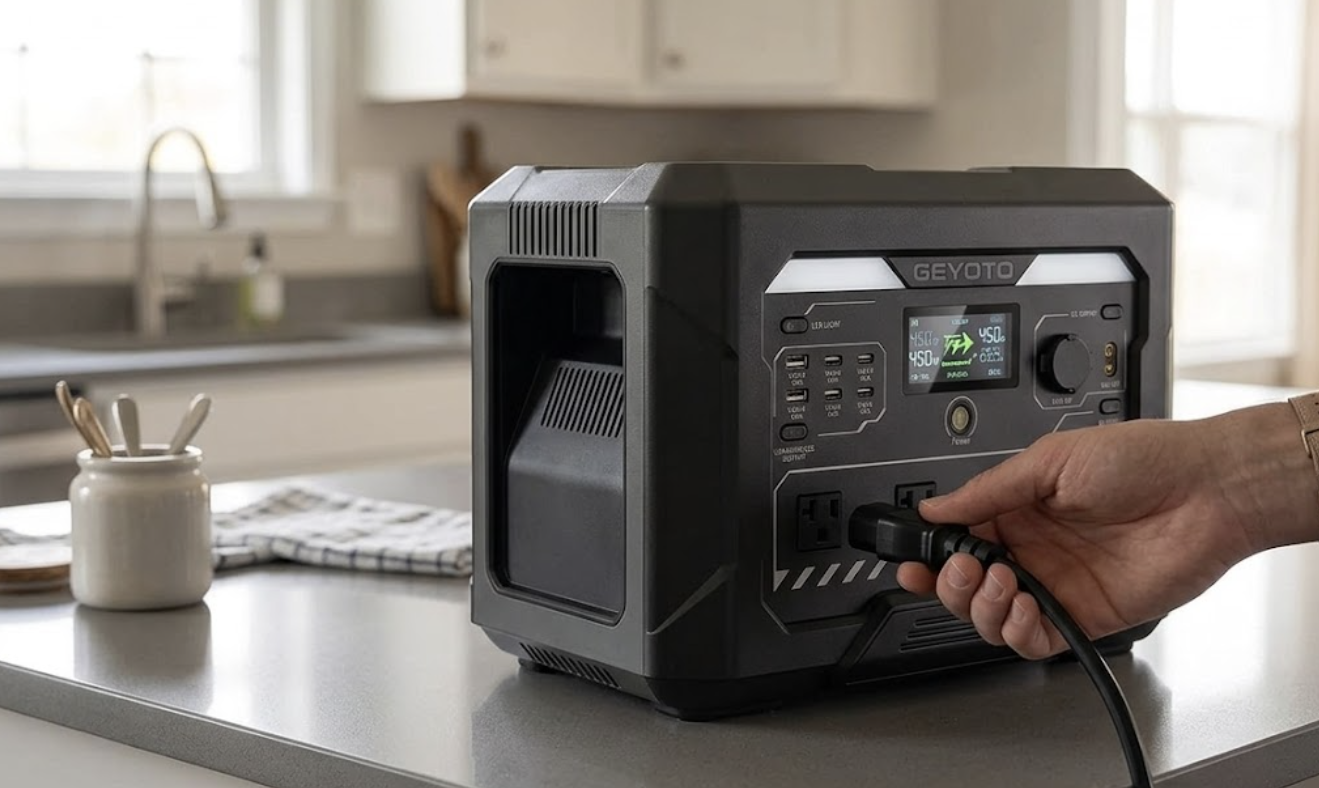
The GEYOTO N1000 provides an excellent technical solution to these rigorous residential energy challenges by optimizing internal power density. This platform integrates a heavy-duty 1800W pure sine wave inverter with a substantial 1024Wh storage capacity. Thanks to this robust layout, the system effortlessly controls 95% of demanding appliances in common household scenarios without experiencing thermal overloads. Users can run full-size refrigerators, high-speed internet routers, and medical support equipment simultaneously with complete peace of mind.
Additionally, the system features an advanced bi-directional super-fast charging mechanism that eliminates the need for cumbersome external power adapters. This technology allows the unit to recharge fully from a standard residential wall outlet in approximately 1.5 hours. This rapid 90-minute turnaround time ensures that the platform remains fully prepared for subsequent emergency deployment cycles. When utility power remains unavailable for days, the high-conversion solar harvester system maintains off-grid operational independence. The internal controller accepts high-wattage solar photovoltaic arrays, translating variable sunlight into stable, reliable storage power quickly. Furthermore, an integrated 10ms level automatic transfer switch provides immediate backup power, ensuring that home computers never reboot during a sudden blackout.
Uncompromising Thermal and Chemical Defensive Frameworks by GEYOTO Technology Limited
Sustaining maximum electrical output under heavy residential loads demands absolute stability at the molecular level. To achieve this, the specialized design teams at GEYOTO (GEYOTO Technology Limited) utilize top-tier Lithium Iron Phosphate chemistry, commonly known as LiFePO4. The robust crystalline structure of LiFePO4 cells delivers superior thermal resilience compared to traditional, volatile lithium-ion variants. This premium formulation guarantees an exceptional 3000 plus full charge-discharge cycles before the storage capacity degrades to 80% of its original rating.
Concurrently, a sophisticated proprietary Battery Management System continuously monitors cell health across multiple parameters. This integrated digital framework employs highly responsive microcontrollers to audit voltage balance, cell temperatures, and current tracking constantly. If the system detects an unexpected fluctuation, it instantly deploys protective countermeasures to isolate the hazard. This active monitoring system prevents common battery failures like overvoltage, over-charging, or localized thermal runaways. Thus, GEYOTO combines strong physical cells with smart safety software to ensure complete operational security inside residential spaces. The heavy-duty outer casing also features flame-retardant materials to provide an extra layer of physical security for families.
Conclusion
True residential emergency preparedness depends on high inverter wattage, swift charging recovery, and uncompromised battery safety profiles. Superficial, low-capacity power backups cannot handle the harsh starting demands of vital modern household appliances. By combining an 1800W pure sine wave inverter, 1024Wh capacity, and advanced LiFePO4 cells, the N1000 sets a new benchmark for domestic energy safety. This optimized technical package delivers the kind of reliable power that keeps your family safe, connected, and comfortable — no matter what the weather brings. Discover more about advanced energy storage innovations and access comprehensive support structures at the official corporate website: https://www.geyoto.com/.
GEYOTO Technology Limited
GEYOTO Technology Limited
+ +1 213 292 9187
email us here
Visit us on social media:
Instagram
Facebook
YouTube
TikTok
Legal Disclaimer:
EIN Presswire provides this news content “as is” without warranty of any kind. We do not accept any responsibility or liability
for the accuracy, content, images, videos, licenses, completeness, legality, or reliability of the information contained in this
article. If you have any complaints or copyright issues related to this article, kindly contact the author above.

Media gallery