
Chengdu, Sichuan, China – October 13, 2026 – Wow, the world of wireless communication is changing so fast right now! One thing that’s really hot on everyone’s radar is High Efficiency RF Amplifiers. If you haven’t heard, a recent report by MarketsandMarkets predicts that the global RF amplifier market could hit about $10.25 billion by 2025. Crazy, right? This huge jump is mainly thanks to how fast 5G is expanding and the increasing demand for better bandwidth and more efficient signal transmission. These amplifiers are super important—they really boost the performance of communication systems. So, for engineers and designers out there, picking the right one can make all the difference in optimizing your devices.
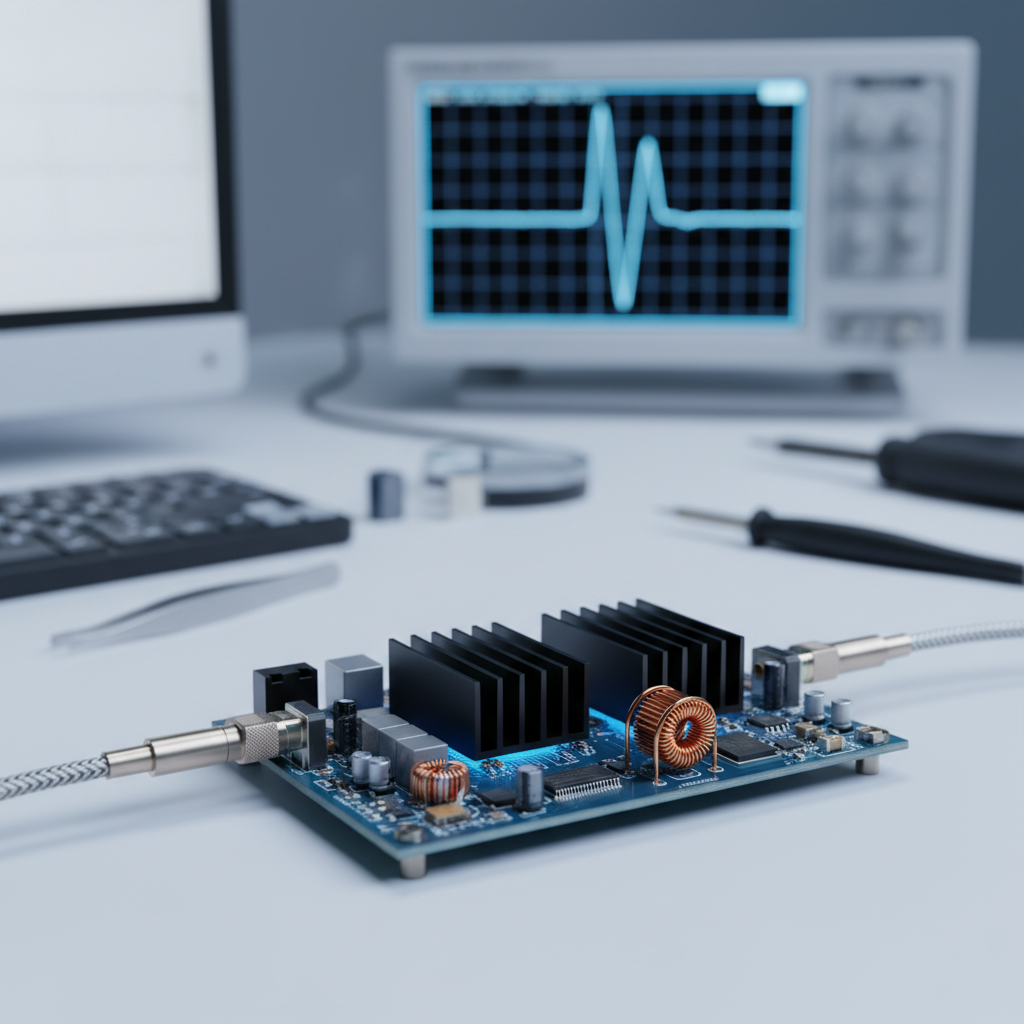
Dr. Emily Thompson, an industry expert from RF Dynamics, puts it nicely: ‘Choosing the right High Efficiency RF Amplifier is a big deal—it can really influence the overall system’s performance and efficiency. When you’re selecting one, stuff like linearity, gain, and how well it manages heat should be top of mind.’ If you understand these operational details, you can make smarter choices that take your RF tech to the next level. In the end, it’s all about making informed decisions to push the boundaries of what’s possible in wireless communication.
Understanding RF Amplifier Efficiency and Performance Metrics
When selecting a high-efficiency RF amplifier, understanding the key performance metrics is crucial. The efficiency of an RF amplifier is primarily determined by its ability to convert DC power into RF output with minimal losses. This translates into improved thermal management and extended operational lifespan. Performance metrics such as gain, linearity, and power added efficiency (PAE) play significant roles in the overall effectiveness of the amplifier in various applications, from telecommunications to broadcasting.Among the different types of RF amplifiers, such as audio, RF power, and linear amplifiers, each has unique characteristics catering to distinct needs. Materials such as Gallium Nitride (GaN), Gallium Arsenide (GaAs), and Silicon Germanium (SiGe) present varied performance advantages. GaN-based amplifiers, in particular, offer remarkable capabilities by reducing parasitic parameters and utilizing shorter gate lengths, contributing to superior efficiency and output power. As the RF semiconductor market continues to expand, understanding these nuances enables engineers to make informed decisions that will optimize system performance in an increasingly competitive landscape.
Efficiency and Performance Metrics of RF AmplifiersIdentifying Your Application Needs for Optimal Amplifier Selection
When selecting a high-efficiency RF amplifier, understanding your application needs is crucial for optimal performance. Different applications, such as telecommunications, broadcasting, or medical devices, impose varied requirements on amplifiers. According to a recent report from MarketsandMarkets, the RF amplifier market is projected to grow from USD 4.5 billion in 2021 to USD 7.0 billion by 2026, highlighting the increasing demand for specialized amplifiers tailored to specific industries. This growth underscores the importance of assessing the unique specifications and operational parameters essential for your intended application.For instance, in telecommunications, factors such as frequency range, power output, and linearity are paramount, as they directly affect signal integrity and coverage. A study by the IEEE indicated that mismatched amplifiers can lead to signal distortion, reducing system efficiency by nearly 30%. Conversely, in medical applications, where precision is key, factors such as noise figure and bandwidth assume greater significance. Understanding these nuances allows engineers and developers to select an RF amplifier that not only meets performance criteria but also integrates seamlessly with existing systems, ultimately enhancing overall application efficacy.
Key Features to Look for in High Efficiency RF Amplifiers
When selecting a high-efficiency RF amplifier, it’s essential to prioritize certain key features for optimal performance. Look for amplifiers that offer a wide frequency range, as this ensures compatibility with various applications. Additionally, high linearity and low distortion are critical for maintaining signal integrity, especially in communication systems where clarity is paramount. Efficiency ratings should also be carefully considered, as a higher efficiency translates to reduced power consumption and heat generation, prolonging the lifespan of the device.
At Mars RF, our advanced manufacturing capabilities support the production of high-quality RF amplifiers. Equipped with state-of-the-art machinery such as SMT machines and high vacuum eutectic furnaces, we ensure precise assembly and superior performance. Our automatic PCB cleaning machines and helium leak detectors guarantee that each component meets stringent quality standards, ultimately contributing to the reliability and efficiency of our RF amplifiers. Whether you need robust performance for industrial applications or compact solutions for consumer electronics, selecting the right amplifier with these key features is essential for achieving optimal results.
Evaluating Different RF Amplifier Technologies and Topologies

When evaluating different RF amplifier technologies and topologies, it’s crucial to understand how these choices impact overall performance. Various technologies, such as GaN, GaAs, and LDMOS, each come with their unique advantages and disadvantages. For instance, GaN amplifiers offer high efficiency and wide bandwidth, making them ideal for high-power applications. Conversely, GaAs models excel in low-noise applications but may not handle high power output as effectively. Thus, identifying the specific requirements of your application is key to selecting the right technology.When considering the topology, matching the amplifier type to your circuit design is essential. Some common topologies include Class A, B, and C, each having distinct characteristics regarding linearity and efficiency. For optimal performance, it’s advisable to ensure proper load impedance and consider using a distributed amplifier topology for enhanced bandwidth.One essential tip is to always factor in thermal management when selecting an RF amplifier. Adequate heat dissipation can significantly affect the longevity and reliability of your amplifier. Additionally, don’t overlook the importance of evaluating the associated power supply requirements, as these will directly impact amplification performance and efficiency.
Common Pitfalls to Avoid When Choosing an RF Amplifier
When choosing a high-efficiency RF amplifier, it’s crucial to avoid common pitfalls that can hinder optimal performance. One of the leading challenges designers face is the trade-off between power amplifier efficiency and linearity. According to a recent industry report, nearly 75% of engineers experience difficulties balancing these two factors, ultimately impacting the performance and reliability of wireless applications. Inadequate attention to this balance can result in amplifiers that either waste power or fail to maintain signal integrity, ultimately leading to subpar system performance.
Another critical aspect to consider is selecting amplifiers that meet specific frequency and gain requirements without compromising other operational parameters. Many engineers overlook the implications of bandwidth on amplifier linearity. Choosing an amplifier with insufficient linearity for a given application may lead to distortion and signal degradation. Industry data suggest that a significant percentage of design failures stem from overlooking relevant specifications during the selection process. By diligently evaluating these parameters and avoiding these pitfalls, designers can significantly improve the performance of their RF systems.
Best Practices for Integrating RF Amplifiers into Your System
Integrating RF amplifiers into your system requires careful consideration of several best practices to ensure optimal performance. First and foremost, understanding the specifications of the RF amplifier is crucial. You should choose an amplifier that matches your system’s frequency range and power requirements. In addition, pay attention to the gain characteristics of the amplifier; a high gain is essential for enhancing the signal strength while minimizing noise. It is also important to assess the linearity of the amplifier, as distortion can significantly impact the performance of the overall system.Another key aspect is the thermal management of the RF amplifier. Effective heat dissipation mechanisms, such as heatsinks or fans, must be in place to prevent overheating and ensure reliable operation. Additionally, proper impedance matching between the amplifier and other components, such as the antenna or transmitter, is vital to maximize power transfer and minimize reflections. Lastly, considering the layout of the circuit can affect the performance; minimizing the distance between components and using high-quality materials can reduce losses and improve efficiency in the RF front end. By adhering to these best practices, you can effectively integrate RF amplifiers into your system for enhanced communication capabilities.
10 Essential Tips for Choosing a High Efficiency RF Amplifier for Optimal Performance
| Tip Number | Tip Description | Key Considerations | Performance Metrics |
|---|---|---|---|
| 1 | Determine Frequency Range | Ensure amplifier covers the required frequency | Gain: dB |
| 2 | Assess Power Handling | Match the amplifier’s power rating with system needs | Output Power: Watts |
| 3 | Evaluate Efficiency | Look for high efficiency ratings to minimize heat | Efficiency: % |
| 4 | Consider Linearity | Ensure low distortion across all operating levels | AM/PM Distortion: % |
| 5 | Review Thermal Management | Check for adequate cooling solutions | Operating Temp: °C |
| 6 | Analyze Input VSWR | Select amplifiers with a low voltage standing wave ratio | VSWR Ratio |
| 7 | Check for Frequency Response | Verify flat response in the operating band | Flatness: dB |
| 8 | Assess Build Quality | Look for durable materials and reliable assembly | MTBF: Hours |
| 9 | Consider Noise Figure | Select low noise amplifiers for sensitive applications | Noise Figure: dB |
| 10 | Check for Compatibility | Ensure it integrates well into existing systems | Interfacing: Types |
Conclusion
When selecting a High Efficiency RF Amplifier, it is crucial to understand the efficiency and performance metrics relevant to your specific application. Identifying your needs is the first step in making an informed choice. Key features such as thermal management, bandwidth, and noise figure play significant roles in performance and should be prioritized. Evaluating different technologies and topologies can further refine your options, while being aware of common pitfalls, such as overlooking compatibility with existing systems, can save you from costly mistakes.Integrating a High Efficiency RF Amplifier into your system involves best practices that enhance performance. At Mars RF Microwave, we leverage state-of-the-art equipment, including SMT machines and high vacuum eutectic furnaces, to ensure our amplifiers meet the highest standards of efficiency and reliability. This dedication to quality in the production process allows us to deliver optimal solutions that align with our clients’ needs.
About us
Mars RF is the best manufacturer of high power RF amplifier module & subsystem in China due to its more than 20 years experience in design, development, production and supply of RF and microwave products. Mars RF now has more than 200 employees and more than 45,000 square meters( approximately 484,380 ft²) self-owned manufacturing base.
Media Contact
Company Name: Mars RF
Contact Person: Media Relations
Email: Send Email
Country: China
Website: https://www.marsrf.com/
Press Release Distributed by ABNewswire.com
To view the original version on ABNewswire visit: 10 Essential Tips for Choosing a High Efficiency RF Amplifier for Optimal Performance


